
Everybody wins!
I want to tell you a story about how conflicts start - and how they end. It's a tale about a little, undramatic event in history called the Cuban Missile Crisis.
In 1962, the world came the closest it ever has to the brink of nuclear war.
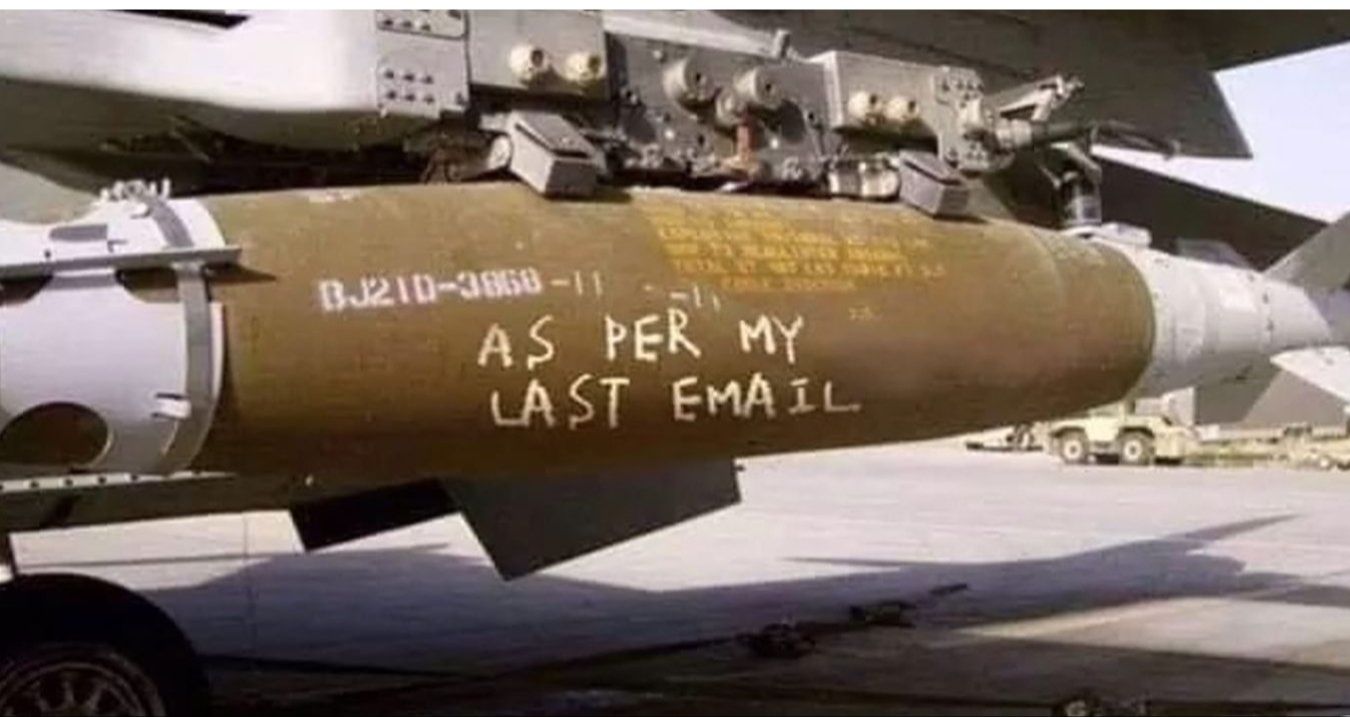
The US had attempted to overthrow Cuban dictator Fidel Castro. In response, Castro approached Russia and formed an agreement: Russia could place Soviet nuclear missiles in Cuba to deter further US invasion.
The US discovered the missiles, and President Kennedy ordered for Cuba to be quarantined. If the Russians launched, Kennedy said, he would retaliate against the Soviet Union - starting nuclear war.
In cities across America, children were taught to hide under their desks if they heard bombs overhead. People built bomb shelters in their backyards. The US government issued a recipe for long-lasting “doomsday crackers” that could be stored for months or years at a time.
Then something amazing happened.
Nikita Krushchev, the Soviet premier, sent Kennedy a late-night message. “If there is no intention,” he said, “to doom the world to the catastrophe of thermonuclear war, then let us not only relax the forces pulling on the ends of the rope, let us take measures to untie that knot”.
He said, essentially, that he was willing to set aside his ego in service of saving the world.
The problem was - at this point, Krushchev couldn’t withdraw the missiles without risking backlash from his own government. The countries were at a stalemate, even though neither of them wished to go forwards.
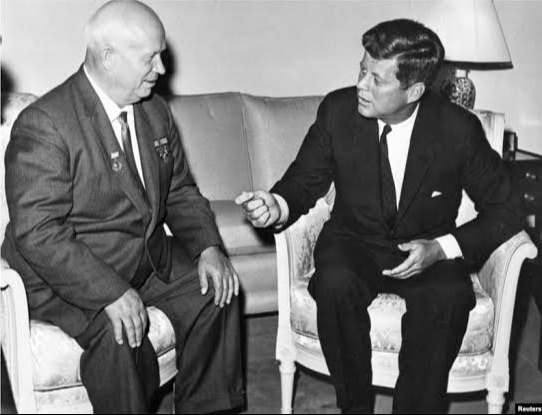
So, Kennedy formed a secret agreement.
The US had missiles in Turkey, close to Russia. Kennedy promised that the US would remove its missiles if Russia removed theirs. Moreover, he and Krushchev established a direct telephone link between the White House and the Kremlin so they would have a line of communication - known as “the Hotline” - in case tensions ever rose again. Expanding the view beyond Cuba was the first step to developing a treaty of mutual nuclear nonaggression between the nations, eventually ending the Cold War.*
In negotiation, this technique is known as “Expanding the Pie”. It is the first, and perhaps most important, tool in the fifth and last Boss Battle of Difficult Conversations: Finding next steps.
Now - even though finding practical resolutions is a solid part of our Art of Difficult Conversations course, not every conflict has a resolution. John and Julie Gottman, premier relationship and conflict researchers (yes, we’re fangirls), say that 69% of couples’ conflicts are about perpetual problems, e.g. ones that are not immediately solvable. Fights about money, kids, relationship structure, sex, and whose parents said what may come up again and again.
*https://history.state.gov/milestones/1961-1968/cuban-missile-crisis

That isn't to say these fights are useless. Every conversation can move us closer to connection, or at at least help us understand each other more. If nothing else, we can get more efficient at having the argument!
However, many conflicts are resolvable, especially ones about practical issues. We can use techniques like expanding the pie to resolve these.
Expanding the pie - taking a fight over limited resources and finding a bigger solution where both people get something they want.
A necessary piece of expanding the pie is understanding why each person wants what they want.
For instance, perhaps I’m arguing with my boss over work-from-home time. I only want to come into the office two days a week, but company policy is five.
Instead of pulling a power move to insist on five days, or bartering with four, he asks why I want two days.
I say, “The office is a long commute and I’m trying to renovate my house right now.”
“Ah,” he says, “How about you come in two days a week for just the next 6 months - I’ll get a waiver on company policy - but head up a project with our international team during that time, who works remotely anyways?”
The key tool here is if you’re going head-to-head over a decision where one person will win and the other will lose, ask why the other person wants what they want.
Like Krushchev and Kennedy realizing that they both wanted nuclear disarmament more than they wanted Cuba, you might find that war isn’t the only answer.
That wraps up our Boss Battles series! If you want more from us, here’s where you can find it:
- The Art of Difficult Conversations live course
- The ADC on-demand and mini-courses:
- Mediation or conflict coaching with our resident experts, Geof and Sara
A final gift for you. If you email us ([email protected]) and request it, we’ll give you a bibliography of our five favorite books on conflict. We want you to have all the skills we can give.
Don’t let difficult conversations ruin beautiful relationships.
To better fights,
Geof and Sara



Responses